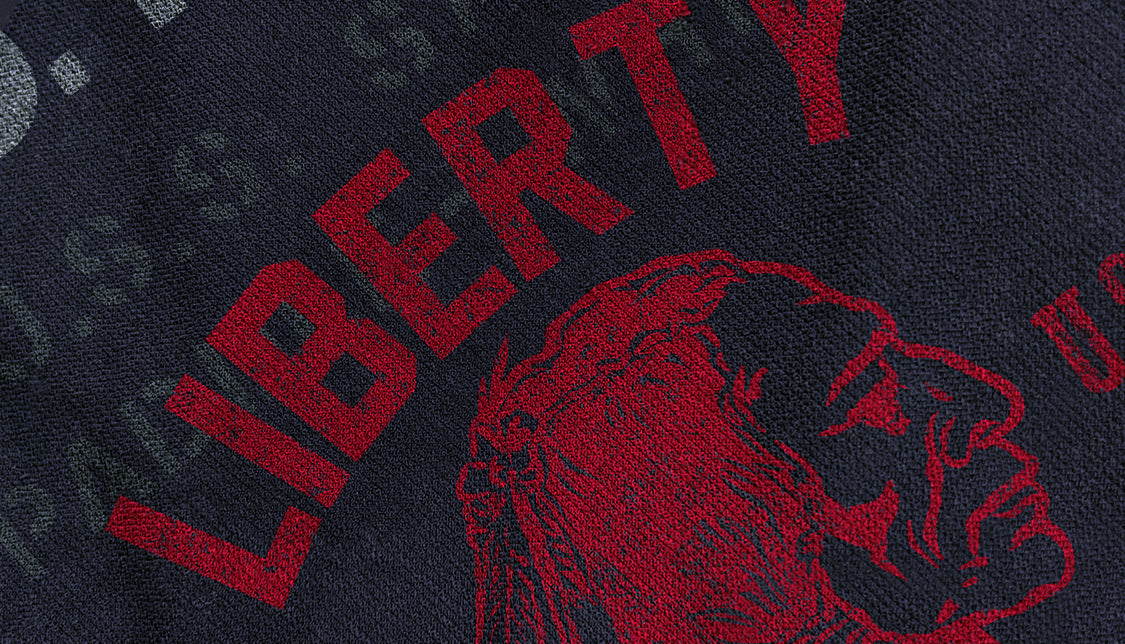
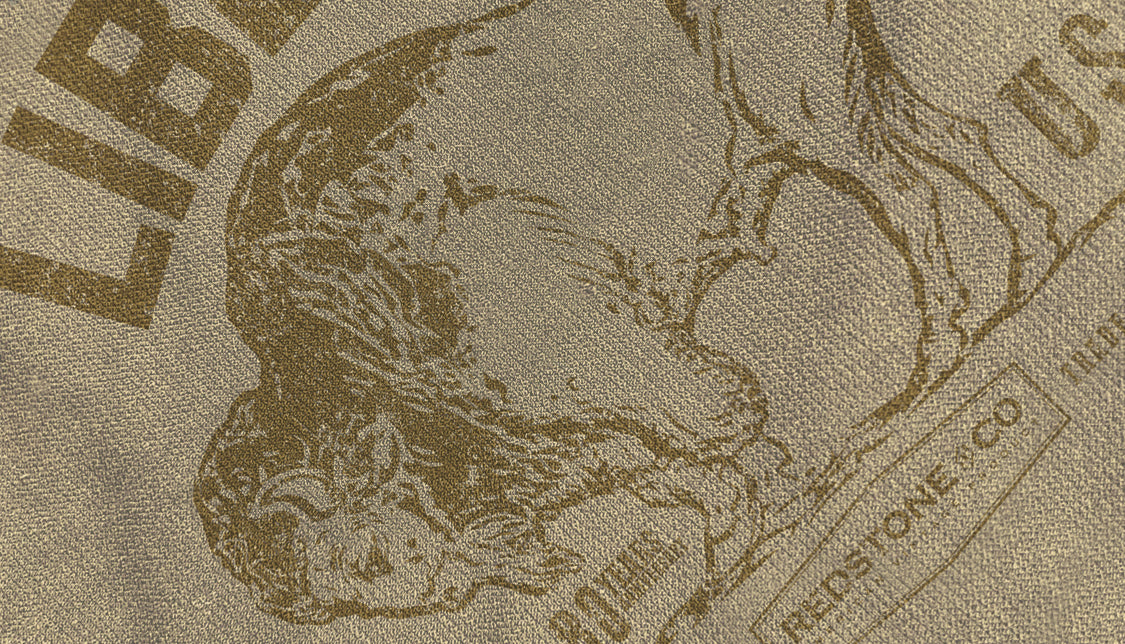
INDIAN LIBERTY
a deck jacket N1 US NAVY DECK JACKET "INDIAN LIBERTY"
Limited edition, only 100 jackets available


Discover the story of the "INDIAN LIBERTY" deck jacket.
A graphic composition with 4 levels of interpretation.
1 - The first level - is the inscription US NAVY on the back of the jacket. This inscription was common to US Navy jackets, and especially on the "early model" Dark Blue jackets.
2 - The second level of information is the "ship identification card" to which the jacket was assigned. This deck jacket belongs to "USS SABLE":
81 is the boat number.
Its name is "USS SABLE".
His nickname is "PADDLE WHEEL".
3 - The INDIAN LIBERTY Stamp.
Personalization on the theme of FREEDOM. Inspired by the 5 cent coin.
Native Americans are the origin of America. They represent the peoples who inhabited the Americas before European colonization. A FREE people.
4 - 80 years of regained freedom in FRANCE.
This illustration is a celebration of the 80th anniversary of the liberation of France by the Allied forces. We pay tribute to these courageous men who risked their lives for our freedom and our future.
The USS Sable (IX-81) was a training ship of the US Navy during World War II


The USS Sable (IX 81) underway on Lake Michigan in 1944. Note the relatively low freeboard for a carrier, the large amounts of smoke from the funnels, and the paddle wheel amidships. U.S. Navy photo
The USS Wolverine (IX 64) is moored in Buffalo, NY, in early August 1942, its conversion from the Seeandbee complete. To the left is the stern of the Greater Buffalo, which has just begun the conversion process to the USS Sable (IX 81). Photo: National Naval Aviation Museum


In the wake of Pearl Harbor, with six fleet carriers in combat, and thirteen more fleet carriers and dozens of escort carriers on order or under construction (and more to come), the U.S. Navy needed thousands of pilots and tens of thousands of deck crews qualified for transport operations. Training these student pilots at bases was relatively easy using land-based airfields. But the only way for them to qualify for carriers was to train on aircraft carriers. And that was the problem. The solution was the paddlewheel carriers Wolverine and Sable.


Orders were cut off, and on March 2, 1942, for $756,000, the Navy requisitioned the ocean liner Seeandbee from the Cleveland and Buffalo Transit Company. It was joined on August 7, 1942, by the Greater Buffalo. The Navy's "Corn Belt Fleet" was born.
The six existing carriers could not be spared for training. Even if one were spared, it would be vulnerable to submarine attack. Anticipating such a need and situation in early 1941, Commander Richard F. Whitehead, aviation aide at the Great Lakes Training Center at Glenview Naval Air Station north of Chicago, proposed the answer to the Bureau of Ships: convert the Great Lakes liners into aircraft carriers and organize pilot and deck crew training in the safe waters of Lake Michigan. The Bureau of Ships ignored it. The idea resurfaced after Pearl Harbor and landed on the desk of Chief of Naval Operations Adman Ernest J. King. Orders were cut, and on March 2, 1942, at a cost of $756,000, the Navy requisitioned the liner Seeandbee from the Cleveland and Buffalo Transit Company. It was joined on August 7, 1942, by the Greater Buffalo. The Navy's "Corn Belt Fleet" was born. The Seeandbee and the Greater Buffalo were coal-fired, paddlewheel pleasure cruise ships equipped with luxurious amenities. These amenities, which included elegant mahogany paneling, upholstered furniture, and over 400 luxurious bathrooms, were the first to disappear as ship refitters stripped away the frills to transform the luxury vessels into no-nonsense training ships.

Ship refitters have removed the frills in order to transform luxury ships into no-frills training vessels.
On August 12, 1942, the Seeandbee was commissioned as the USS Wolverine (IX 64), named in honor of Michigan, Wolverine's home state. The Greater Buffalo was commissioned the following year, on May 8, 1943, as the USS Sable (IX 81). The ships' flight decks were 550 feet long (about the same length as two tiers of a fleet carrier) and were equipped with eight sets of arresting gear. The ships' islands were configured to resemble those of fighter carriers, but neither ship had hangars, maintenance facilities, elevators, or catapults. The hulls were also unarmored, as they would never leave the waters of Lake Michigan. The Wolverine's flight deck was constructed from oak planks, similar to what was then being used on fighter carriers. In addition to its role as a training ship, the Sable served as a testbed. It was the first aircraft carrier equipped with a then-experimental all-metal flight deck. Various non-slip deck coatings, applied in a checkerboard pattern, were evaluated. Furthermore, the Sable conducted tests on the experimental TDR-1, a wooden, remotely piloted drone originally designed as a target aircraft. Later tests equipped the drones with bombs and television cameras, making them the first remotely piloted missiles. The success of these tests led to the TDR-1's combat deployment in 1943 at Bougainville, as part of a covert operation conducted for the remainder of the war. The ships were moored at Navy Pier in downtown Chicago and departed at dawn for tailored air operations about a mile offshore. For a trainee to qualify for transport, they had to successfully take off and land ten times (later reduced to eight).
Traffic jams were a regular occurrence as drivers along Lake Shore Drive stopped to watch. From dawn till dusk, seven days a week, weather and wind permitting, the Corn Belt fleet trained pilots and deck crews.
Trainees had to keep their cockpits open in case they crashed into water and had to escape from a sinking plane, making flights during the winter particularly grueling.
Of the roughly 120,000 landings made by the aircraft carriers, there were just over 200 accidents, of which about 120 were aircraft ditching or crashing in Lake Michigan. Incredibly, only eight pilots were lost. By the time the ships were decommissioned in November 1945, the training carriers had qualified about 35,000 pilots, one of whom was Lieutenant (Jg) George H.W. Bush, the future President of the United States.


-
The USS Sable (IX-81) was a United States Navy training ship during World War II, originally built as the passenger ship Greater Buffalo, a side-wheel excursion steamer. It was purchased by the Navy in 1942 and converted into a training aircraft carrier for use on the Great Lakes. It lacked a hangar deck, elevators, and armament and was not a true warship, but it provided advanced training for naval aviators in carrier takeoffs and landings. On its first day of service, 59 pilots qualified within nine hours of operations, each completing eight takeoffs and landings. Pilot training took place seven days a week in all types of weather. George H.W. Bush, later President of the United States, was one of the aviators who trained on the Sable. The Sable was decommissioned on November 7, 1945. It was sold for scrap on July 7, 1948 to the HH Buncher Company. It and its sister ship, the USS Wolverine—which together were used to train over 17,000 pilots, landing signal officers, and other naval personnel—have the distinction of being the only coal-fired, freshwater side-paddle ship.