Aviation Jackets - Flight Jackets - WWII
American Flight Jackets
Originally, aviator jackets were designed to provide military personnel with lightweight, high-performance workwear suited to extreme conditions. Over the decades, these models have undergone numerous transformations, both technical and aesthetic. This historical overview reveals the evolution of their characteristics, from their exclusive use in the armed forces to their integration into contemporary casual fashion.
At REDSTONE AND CO , we have gathered a selection of the most significant models, enriched with detailed descriptions and illustrations, in order to trace the evolution of these iconic pieces.
Jacket A1 (1927)


The very first version of this type of jacket appeared in 1927. Designed by several workshops, the A1 jacket, despite the diversity of its manufacturers, shared a common set of essential characteristics. While its appearance was understated, it became synonymous with prestige and robustness, serving as a benchmark even during the Second World War, long after the advent of more sophisticated models.
Additional information:
- Used by both pilots and technicians, it sometimes displayed badges or embroidery, indicating membership in a unit.
- Its manufacture, focused on resistance to weathering and abrasion, makes it a sought-after piece for collectors today.
A2 jacket (1940)


Derived from a natural evolution of the A1 model, the A2 jacket was developed from the early 1930s. Made mainly from horse or goat leather, it is distinguished by robust zippers, reinforced cuffs and a knitted belt which ensure better protection against the elements.
Additional information:
- Unlike its button-equipped predecessor, the introduction of zippers allowed for faster adaptation during in-flight maneuvers.
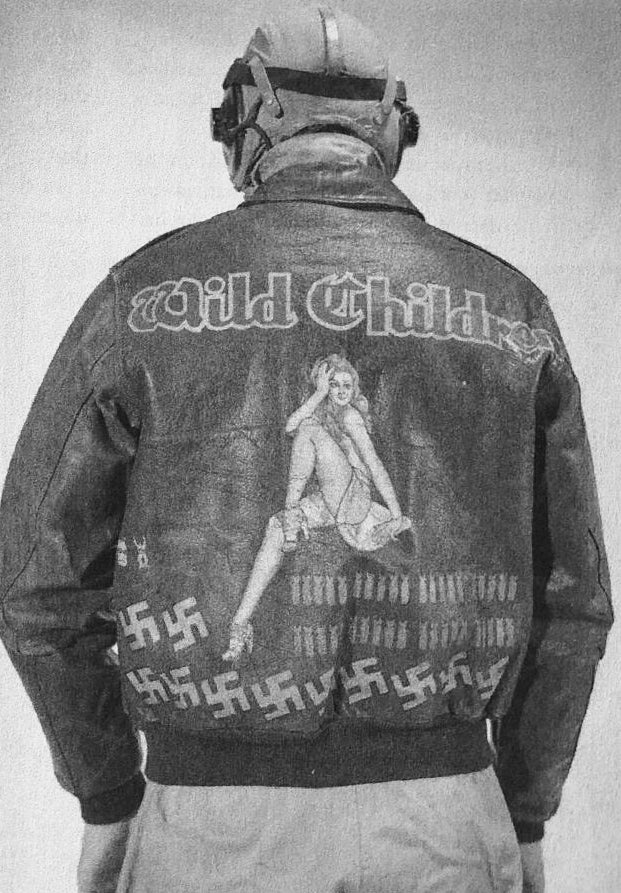
- This model, widely adopted during the Second World War, was often personalized with badges and insignia, reflecting the pride of the crews.
B3 jacket (1934)


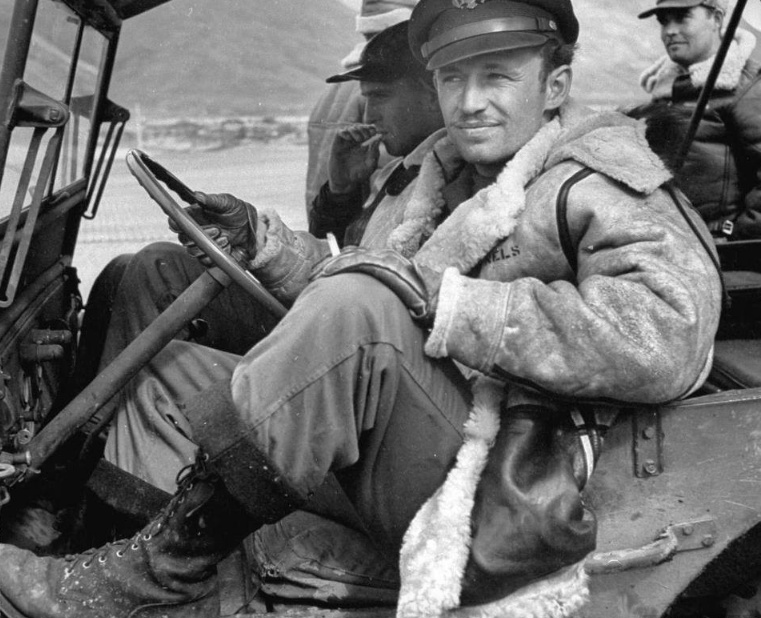
Designed for aviators flying at high altitudes, the B3 jacket was launched in 1934 to meet the requirements of bomber pilots. Made from a combination of sheepskin and thick fur, it guaranteed effective thermal insulation even at 25,000 feet. The design included leather straps to secure the collar, although the model did not feature a knitted belt.
Additional information:
- Its ability to retain heat in freezing environments earned it a legendary reputation among pilots.
- Reinforcements at the elbows and other technical details were often added according to the specific needs of the units, enhancing its longevity.
D1 jacket (1937)


Introduced in 1937, the D1 jacket was initially designed for ground personnel facing harsh weather conditions. Its streamlined design offered great freedom of movement while providing effective protection against the cold.
Additional information:
- Although intended for maintenance crews, some pilots quickly saw the advantage and adopted it as a complement to their main equipment.
- The D1 is now considered a pioneer in the design of functional and comfortable workwear.
Jacket B6 (1939)


Appearing around 1943, the B6 jacket is a lighter version of the B3, designed to meet the specific needs of fighter planes lacking heating systems.
Additional information:
- Lightweight and adaptable, it offered pilots increased mobility and optimized comfort in aircraft like the famous P38, renowned for its lack of heating devices.
- Its design also aimed for ease of maintenance, a crucial criterion in the context of war.
B7 jacket (1941)


Also known as the B7 Arctic parka, this jacket was designed between 1941 and 1942 to protect both flight crews and ground personnel operating in extreme environments. Its three-quarter length cut, made primarily of sheepskin, is enhanced by a coyote fur-lined hood, providing exceptional insulation against the cold and snowstorms.
Additional information:
- High manufacturing costs and supply difficulties during the war limited its production.
- Today, the B7 model is considered a benchmark for military winter clothing, both for its innovative design and its thermal efficiency.
M422 and M422a jackets (1941)


These models are distinguished primarily by one detail: the M422a version incorporates a discreet slot on the left pocket, designed to hold a pen. Prior to March 28, 1940, the M422 model was standardized by the U.S. Naval Aviation Bureau. The M422a, officially adopted on October 1, 1941, was subsequently issued, notably to pilots flying P-40s while assisting Chinese forces against Japanese expansion.
Additional information:
- These jackets combine robustness and practicality, and their design is always praised for combining military functionality and timeless aesthetics.
- Their influence can be seen in many modern reissues, prized by aviation enthusiasts.
G1 jacket (1947)


Launched in 1947, the G1 jacket represents an evolved version of the M422a. After numerous tests and adjustments, it nevertheless retains the use of goatskin, sheepskin and wool knit, thus guaranteeing timeless quality and authenticity.
Additional information:
- The G1 has stood the test of time thanks to its robustness and comfort, becoming a symbol of revisited military style.
- This model continues to inspire current designers and remains a must-have for collectors of the genre.
Differences between the M422a jacket and the G1
At first glance, these two models seem very similar, but a few nuances clearly distinguish them.
- Standard and evolution: The M422a was standardized by the U.S. Naval Aeronautics Bureau on October 1, 1941, while the evolved version, the G1, was introduced in 1947 with minor modifications.
-
Design and finishes: The G1 features a slightly smaller collar and simplified pocket flaps, unlike the M422a which, for example, had a "salmon" rayon lining, while the G1 opted for a brown shade.
Additional information: - These adjustments reflect the gradual adaptation of military requirements towards a more ergonomic cut and a more refined finish.
- Comparing these two jackets allows us to appreciate the evolution of design in the context of technological innovation and the standardization of equipment.
B10 jacket (1943)


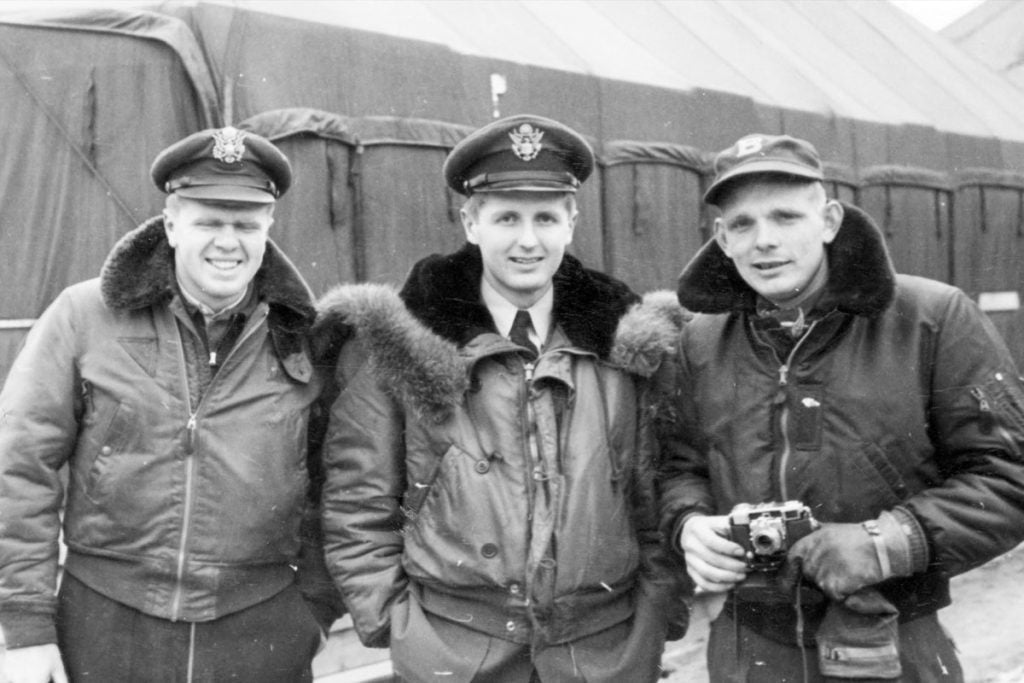
Introduced in 1943, the B10 jacket marked a transition to the use of textile materials, while retaining an alpaca fur collar and lining. Although more elegant than earlier sheepskin models, it did not offer the same level of thermal insulation. Its style was reminiscent of the G1, with similar pockets and a zipper lacking a wind guard.
Additional information:
- The B10 represents a bold attempt to combine textile refinement with functionality, an approach that would foreshadow hybrid designs in the following decades.
- This model is appreciated for its contemporary aesthetics while maintaining a link with its military roots.
B15 jacket (1944)


Standardized on April 7, 1944, the B15 jacket was designed as an alternative to sheepskin coveralls. It retained some traditional elements while incorporating new materials, such as cotton-rayon and nylon blends, to improve its durability and flexibility. A notable innovation was the pen pocket, located on the upper left arm, which would become a recurring feature in future models.
Additional information:
- The B15 embodies the adaptation of military equipment to modern requirements, offering protection and practicality in a single garment.
- Its design paved the way for innovations in military fashion, influencing many subsequent creations in both the civilian sector and that of historical replicas.
Each aviation jacket carries within it a rich history, oscillating between technical innovation and stylistic evolution. Whether from the era of major conflicts or as part of a modern urban style, these jackets continue to embody the pioneering spirit of aviators, and their legacy endures through ever more daring reinterpretations.